
 |
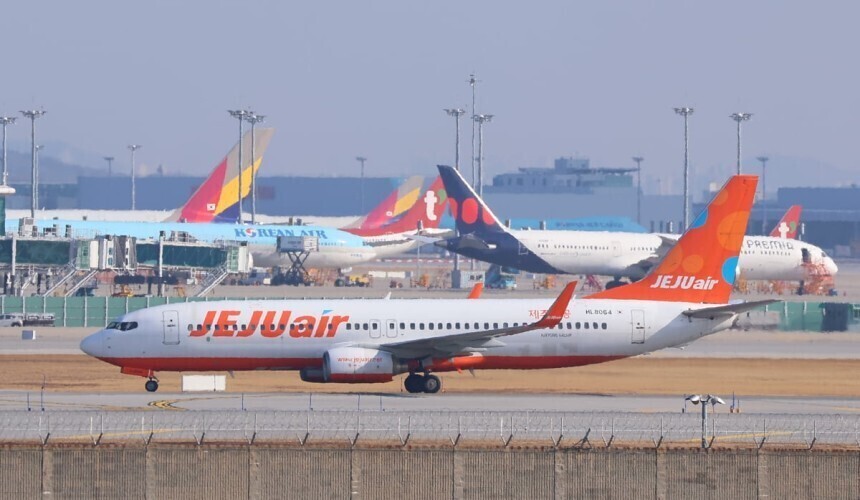
Photo = Jeju Air |
[Alpha Biz= Kim Jisun] South Korea’s aviation industry is entering a phase of “survival-driven” capacity cuts, as soaring fuel prices triggered by Middle East tensions force airlines to scale back loss-making routes.
According to industry sources on April 1, Jeju Air, the country’s largest low-cost carrier (LCC), has decided to cancel a total of 110 flights on three Southeast Asian routes—Incheon to Hanoi, Bangkok, and Singapore—between May and June.
This marks the largest single-airline reduction announced so far in response to the current fuel cost surge.
Specifically, from May 12 to June 30, the Incheon–Hanoi route will be reduced from seven flights per week to four, resulting in 44 canceled flights. The Incheon–Bangkok route will also be cut from seven to four weekly flights between May 8 and June 30, eliminating 48 flights. Meanwhile, the Incheon–Singapore route will be reduced from seven to four weekly flights from May 8 to May 26, canceling 18 flights.
The schedule adjustments are pending government approval, and bookings for the affected flights have already been blocked on Jeju Air’s website.
Notably, high-demand and relatively profitable routes—such as those to Japan—have been excluded from the cuts, as airlines seek to preserve core revenue streams.
Jeju Air’s decision reflects a more aggressive approach compared to other LCCs, which have typically reduced around 40 to 50 flights for April and May schedules. By extending cuts through the end of June, the airline appears to be proactively managing costs amid worsening profitability.
Industry observers warn that if high fuel prices persist, airlines may face escalating risks of operational shutdowns, as rising costs outpace revenue from ticket sales.
Alphabiz Reporter Kim Jisun(stockmk2020@alphabiz.co.kr)