
 |
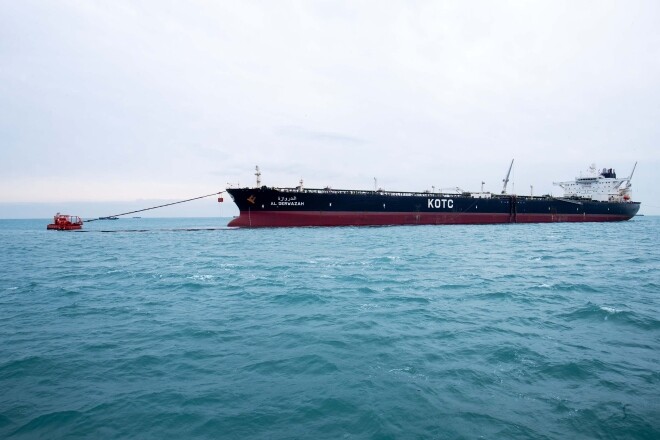
A vessel carrying 2 million barrels of Kuwaiti crude oil. (Photo: Courtesy of Korea National Oil Corporation) |
[Alpha Biz= Kim Jisun] South Korea has secured an additional 2 million barrels of crude oil as concerns grow over global oil supply after Iran closed the Strait of Hormuz, a key global oil shipping route, amid its conflict with the United States and Israel, the Korea National Oil Corporation (KNOC) said on March 6.
The company said a shipment of 2 million barrels of Kuwaiti crude oil arrived at the Ulsan oil storage base, where unloading operations are now underway. The volume is roughly equivalent to South Korea’s daily oil consumption.
Considering that one barrel equals about 159 liters, the shipment amounts to approximately 318 million liters of crude oil. The additional supply comes at a time when concerns over oil shortages have pushed global energy prices higher.
KNOC previously signed an international joint stockpiling agreement with Kuwait Petroleum Corporation (KPC) in 2024 to store 4 million barrels of crude oil at the Ulsan facility. Under the system, KNOC leases idle storage capacity to foreign national oil companies, generating rental income during normal times while securing the priority right to purchase the stored oil in case of an emergency.
KNOC President Sohn Joo-seok, who took office the previous day, visited the Ulsan storage base to inspect preparedness for potential oil reserve releases.
“The joint stockpiling program provides a practical means to secure additional crude oil during emergencies,” Sohn said. “We must remain fully prepared to ensure swift domestic supply in close cooperation with oil-producing countries if needed.”
KNOC currently operates nine oil storage facilities across the country, including in Ulsan, Geoje and Yeosu. As of the end of last month, the facilities had a total capacity of 146 million barrels, with about 100 million barrels currently stored.
Combined with privately held reserves, South Korea’s total oil stockpile can cover approximately seven months (208 days) of domestic consumption, allowing the country to respond to short-term supply disruptions.
Last year, 69.1% of South Korea’s crude imports came from the Middle East, and more than 95% of those shipments passed through the Strait of Hormuz. Major suppliers included Saudi Arabia (33.6%), the United States (17.0%), the United Arab Emirates (11.4%), Iraq (10.4%), Kuwait (8.5%) and Qatar (4.4%).
If the closure of the Strait of Hormuz continues, analysts warn that higher exchange rates, rising oil prices and increased logistics costs could significantly raise production costs for the Korean economy.
Alphabiz Reporter Kim Jisun(stockmk2020@alphabiz.co.kr)