
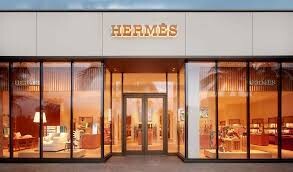
[Alpha Biz= Paul Lee] French luxury fashion house Hermès is under scrutiny after allegations emerged that it assesses potential customers’ personal information—including residence and social media activity—when deciding who can purchase its iconic handbags.
According to French fashion outlet Glitz on January 17, Hermès reportedly includes subjective criteria such as a customer’s “social image” in determining eligibility to buy high-demand bags like the Birkin and Kelly. Some store staff allegedly conducted Google searches to verify customers’ addresses and evaluated the economic and social environment of those areas.
Reports also suggest that sales associates monitored customers’ social media accounts, reviewing posts, online reputations, as well as in-person behavior, tone, manners, and attire during store visits. Glitz described this as “effectively stalking” potential buyers to gauge whether they possessed the social standing deemed appropriate for premium Hermès bags.
In-store signals also play a role: customers who purchase multiple bags quickly or shop at several boutiques may be flagged as “risk signals.” Those wearing non-logo Hermès models are considered “authentic customers,” while those seeking only logo-heavy items are suspected of opportunism. Even the type of watch worn can influence judgment; flashy Rolexes may be seen as overly ostentatious, whereas Audemars Piguet or Richard Mille watches are viewed more positively.
Allegedly, this surveillance continues after purchase. Hermès employees are said to monitor resale platforms to track whether customers resell their products. Those found reselling may be blacklisted, and the staff member who sold the item could face disciplinary action.
Glitz attributed this system to Hermès’ unique compensation model: individual sales incentives do not exist, and bonuses are distributed at the store level. Sales of “quota bags” like Birkin and Kelly do not count toward performance metrics, emphasizing supply control over sales volume. Birkin and Kelly bags typically require a 2–3 year wait due to Hermès’ strategy to maintain scarcity. Prices range from approximately 15 million KRW to 260 million KRW, with an annual supply limited to around 120,000 units.
Purchasing these bags also requires a history of consistent spending on other Hermès products, such as accessories, scarves, and tableware, totaling 50–100 million KRW, before being considered by store managers. Even then, customers often have limited choice regarding color or specifications.
Meanwhile, Hermès recently raised prices for select luxury bags, accessories, and shoes in South Korea on January 4–5. The popular Picotin bag increased from 5.17 million KRW to 5.45 million KRW, a roughly 5.4% hike.

Alphabiz Reporter Paul Lee(hoondork1977@alphabiz.co.kr)