
 |
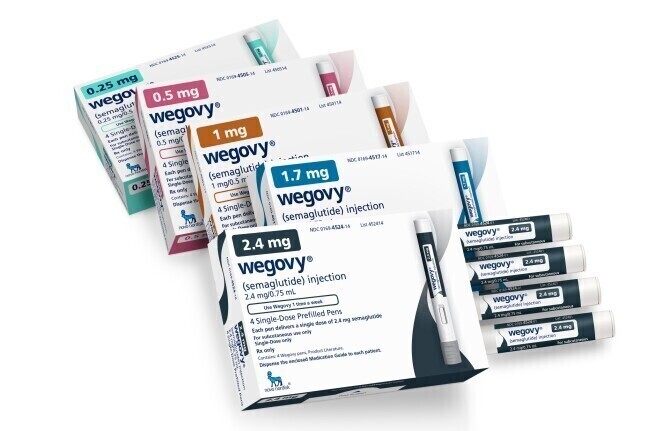
Photo courtesy of Wegovy |
[Alpha Biz= Paul Lee] The U.S. Food and Drug Administration’s recent crackdown on the large-scale marketing of compounded obesity drugs using the same active ingredient as Wegovy is accelerating structural changes in the global weight-loss drug market, analysts say.
According to Reuters, FDA Commissioner Martin Makary said the agency would strictly enforce regulations against companies promoting non-approved compounded drugs as if they were FDA-approved or generic products. Following the announcement, U.S. telehealth firm Hims & Hers halted sales of compounded semaglutide pills it had marketed as alternatives to Wegovy.
The move reflects improved supply conditions for branded injectable obesity drugs such as Wegovy and Ozempic from Novo Nordisk, as well as Mounjaro and Zepbound from Eli Lilly. It also marks a shift from a supplier-driven growth phase to a more competitive market environment marked by pricing pressure and alternative formulations.
Novo Nordisk recently warned that its 2026 revenue and operating profit could fall 5–13% year-on-year at constant exchange rates, citing intensifying competition and U.S. drug price pressure. The company’s shares dropped more than 14% following the announcement, reinforcing views that the obesity drug market is entering a “red ocean” phase.
While the FDA’s action is expected to have limited immediate impact on South Korean drugmakers—given that semaglutide’s substance patent remains valid in Korea until June 2028—analysts say profit expectations are likely to be reassessed. Several Korean pharmaceutical companies, including Hanmi Pharmaceutical, Chong Kun Dang, LG Chem, Dong-A ST, and HK inno.N, are currently developing GLP-1–based obesity treatments, though the path to sustainable profitability is becoming increasingly challenging.
Alphabiz Reporter Paul Lee(hoondork1977@alphabiz.co.kr)