 |
Photo courtesy of Yonhap News |
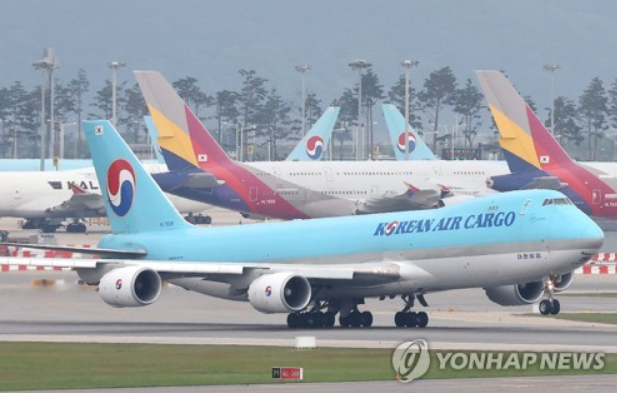
[Alpha Biz= Paul Lee] Korean Air is being urged to maximize synergies from its integration with Asiana Airlines to bolster cash flow and maintain financial stability, as borrowing has surged following the merger, market participants said.
According to the investment banking industry on March 1, Korean Air plans to conduct demand forecasting for KRW 250 billion worth of corporate bonds on March 3, including KRW 200 billion in three-year notes and KRW 50 billion in five-year notes. Depending on demand, the issuance could be increased to as much as KRW 450 billion.
While analysts note that Korean Air has maintained solid cash generation and strengthened its capital base even after the merger, they warn that the continued rise in borrowings warrants close monitoring of mid-term financial stability.
Korean Air’s total borrowings nearly doubled to KRW 21.36 trillion as of end-September last year, from KRW 10.96 trillion at the end of 2023. The company’s debt dependence ratio rose 7.8 percentage points to 43.8% over the same period, well above the 30% level generally viewed by credit rating agencies as appropriate.
The burden has been further compounded by the recognition of lease liabilities associated with new aircraft deliveries, pushing net debt to around KRW 15 trillion at end-September, up about 20% from the previous year-end.
Borrowings are expected to remain elevated in the near term, as Korean Air plans to introduce around 15 new aircraft annually between 2026 and 2028, while also investing in engine maintenance facilities and overseas airline equity stakes. The company recently spent approximately KRW 270 billion to acquire a stake in Canada-based WestJet.
Profitability, meanwhile, has weakened sharply. Korean Air’s consolidated operating profit fell 47.2% year-on-year to KRW 1.11 trillion last year, while net profit dropped 53.2% to KRW 647.3 billion. This contrasts with a 41.2% jump in revenue to KRW 25.23 trillion following the consolidation of Asiana Airlines.
Despite these pressures, credit rating agencies generally expect Korean Air to manage its financial burden within a controllable range, citing its accumulated capital strength and solid operating base as key buffers supporting post-merger financial resilience.
Alphabiz Reporter Paul Lee(hoondork1977@alphabiz.co.kr)