 |
Photo = POSCO E&C |
[Alpha Biz= Ellie Kim] Labor disputes are escalating in South Korea’s construction sector two months after the implementation of the revised Trade Union Act, commonly known as the “Yellow Envelope Law,” as conflicting interpretations of employer responsibility continue to create uncertainty.
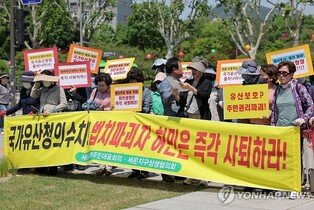
According to industry sources on May 13, the North Gyeongsang Regional Labor Relations Commission delivered a decision to POSCO E&C, acknowledging a union’s request to publicly announce its demand for collective bargaining.
This marks the first case in which a regional labor authority has recognized a bargaining request by a labor union in the general construction sector.
The Korean Construction Workers Union argued that POSCO E&C exercises comprehensive control and supervision over subcontractors and their employees, effectively leading construction operations and holding substantive authority over industrial safety matters. On this basis, the union asserted that the company qualifies as an employer subject to collective bargaining obligations.
Under the ruling, POSCO E&C would have been required to publicly disclose the union’s bargaining request for seven days. The company may appeal the decision to the National Labor Relations Commission and subsequently pursue administrative litigation if necessary.
However, POSCO E&C has indicated that it will not proceed with the disclosure, as additional subcontractor unions—including plant construction unions affiliated with both the Federation of Korean Trade Unions and the Korean Confederation of Trade Unions—have requested separate bargaining units based on their respective umbrella organizations. As a result, the bargaining process has effectively been put on hold.
The revised law allows subcontracted workers to demand collective bargaining with principal contractors that exert substantial influence over working conditions. It also limits excessive corporate claims for damages related to strikes and other industrial actions.
Industry observers note that confusion persists in the early stages of implementation, particularly in large-scale construction sites where hundreds of subcontracting agreements are involved. Inconsistent interpretations by labor authorities regarding what constitutes an “employer” have further complicated the situation.
For instance, on April 24, the Seoul Regional Labor Relations Commission rejected a request by the construction union to separate bargaining units involving construction divisions of Samsung C&T, Hanwha Engineering & Construction, and GS Engineering & Construction.
Similarly, while the North Gyeongsang commission recognized employer status in the case of POSCO E&C, the South Jeolla Regional Labor Relations Commission declined to do so for Joongheung Construction and Joongheung Engineering & Construction, highlighting inconsistencies across jurisdictions.
Alphabiz Ellie Kim 인턴기자(press@alphabiz.co.kr)