
 |
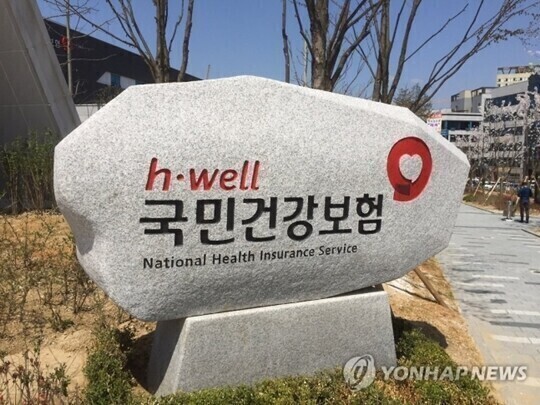
National Health Insurance Service headquarters. (Photo: Yonhap News) |
[Alpha Biz= Paul Lee] South Korea’s National Health Insurance Service (NHIS) has lost its appeal in a lawsuit seeking compensation from domestic and foreign tobacco companies for losses allegedly caused by smoking, marking the second consecutive court defeat in a case filed more than 12 years ago.
On January 15, the Seoul High Court’s Civil Division 6-1 ruled against the NHIS in its damages lawsuit against KT&G, Philip Morris Korea, and BAT Korea, upholding the lower court’s decision in favor of the defendants.
The NHIS filed the lawsuit in April 2014, seeking a total of KRW 53.3 billion in damages, arguing that tobacco companies should reimburse additional medical costs incurred due to smoking-related illnesses. The amount corresponds to medical expenses paid by the NHIS for 3,465 patients who were diagnosed with lung cancer or laryngeal cancer after smoking at least one pack a day for 20 years or more.
The key issue in the case was whether a causal relationship between smoking and lung cancer could be legally established for individual patients.
The appellate court found that the NHIS failed to prove the alleged illegal acts themselves—namely defects in cigarette design or labeling—and therefore did not proceed to assess individual causation. The court made clear, however, that epidemiological correlations alone are insufficient to presume causation between smoking and lung cancer in individual cases.
Citing Supreme Court precedent, the court noted that proof that a person smoked and later developed lung cancer does not, by itself, establish a high probability of a direct causal relationship between the two. To recognize such causation, additional factors must be examined, including the timing and duration of smoking, the onset of cancer, the individual’s health status prior to smoking, lifestyle habits, changes in medical conditions, and family medical history.
The NHIS argued that causation should be presumed based solely on epidemiological correlations between smoking and lung cancer. The court rejected this argument, stating that epidemiological studies do not provide precise information about the specific causes of disease in individual patients.
The court also dismissed the NHIS’s argument for shifting the burden of proof—a principle sometimes applied in environmental or medical litigation—finding that the conditions for such an exception were not met in this case.

Alphabiz Reporter Paul Lee(hoondork1977@alphabiz.co.kr)