
 |
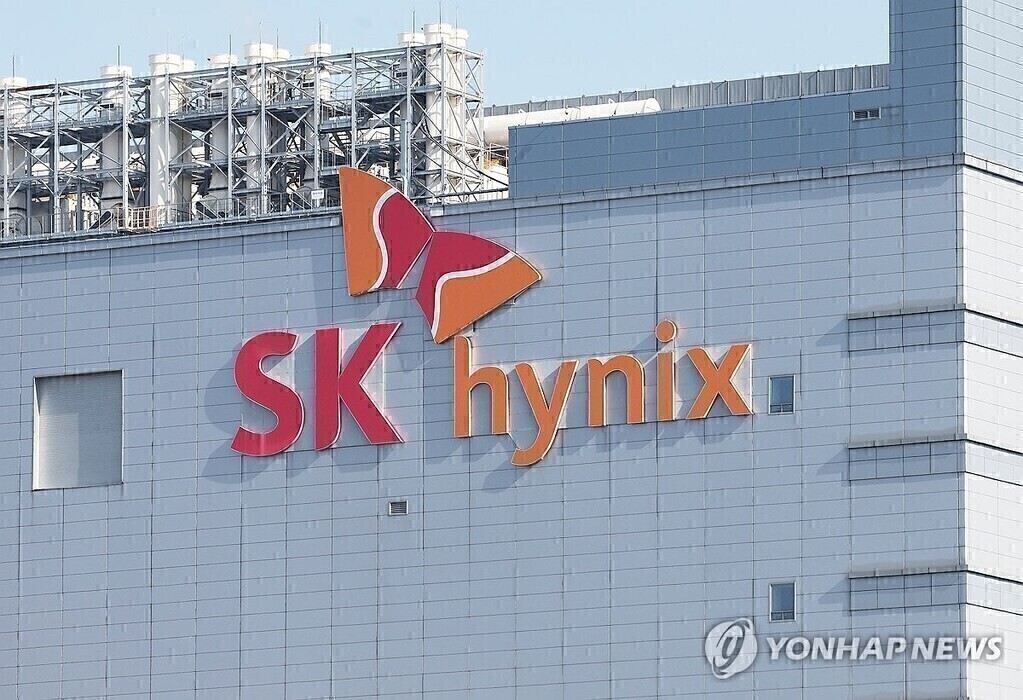
Photo courtesy of Yonhap News |
[Alpha Biz= Paul Lee] Despite delivering record earnings and a sharp rise in its share price last year, SK hynix reported a dividend payout ratio in the mid-5% range, well below the KOSPI average and far short of the government’s threshold for tax incentives aimed at boosting shareholder returns.
SK hynix announced its earnings and shareholder return plans on January 29. The company posted operating profit of KRW 47.21 trillion last year, up 101.2% from a year earlier, marking the highest annual profit in its history. Its share price also surged roughly 280% year on year.
For shareholder returns, SK hynix plans to pay KRW 1.14 trillion in year-end cash dividends. Total cash dividends for the year will amount to KRW 2.1 trillion. In addition, the company will cancel 15.3 million shares, equivalent to 2.1% of its outstanding shares, through share buybacks worth KRW 12.24 trillion.
On a per-share basis, SK hynix paid a total annual dividend of KRW 3,000, nearly twice that of Samsung Electronics (KRW 1,668). However, a different picture emerges when looking at the dividend payout ratio, which measures the proportion of net income attributable to controlling shareholders returned as cash dividends.
Based on the Ministry of Economy and Finance’s definition of “high-dividend companies,” SK hynix’s payout ratio is calculated by dividing total cash dividends by net income attributable to controlling shareholders. Using this measure, the company’s payout ratio stood at 4.89%, derived from dividends of KRW 2.1 trillion against controlling shareholder net income of KRW 42.92 trillion. This is well below Samsung Electronics’ payout ratio of 25.1% and significantly lower than the roughly 30% average among KOSPI-listed companies.
The relatively low payout ratio reflects structural characteristics of the semiconductor industry, which requires heavy spending on research and development and capital investment, and is marked by pronounced boom-and-bust cycles. SK hynix maintains a policy of allocating the mid-30% range of annual revenue to capital expenditures.
Instead of raising dividends, the company has emphasized capital returns through large-scale share cancellations and growth investments, including plans to invest up to USD 10 billion (approximately KRW 13 trillion) in U.S.-based artificial intelligence operations.
Market experts say that as SK hynix continues to expand in scale and profitability, it may be time to strengthen board oversight and reassess its principles for allocating future earnings between investment and shareholder returns.
Alphabiz Reporter Paul Lee(hoondork1977@alphabiz.co.kr)