
 |
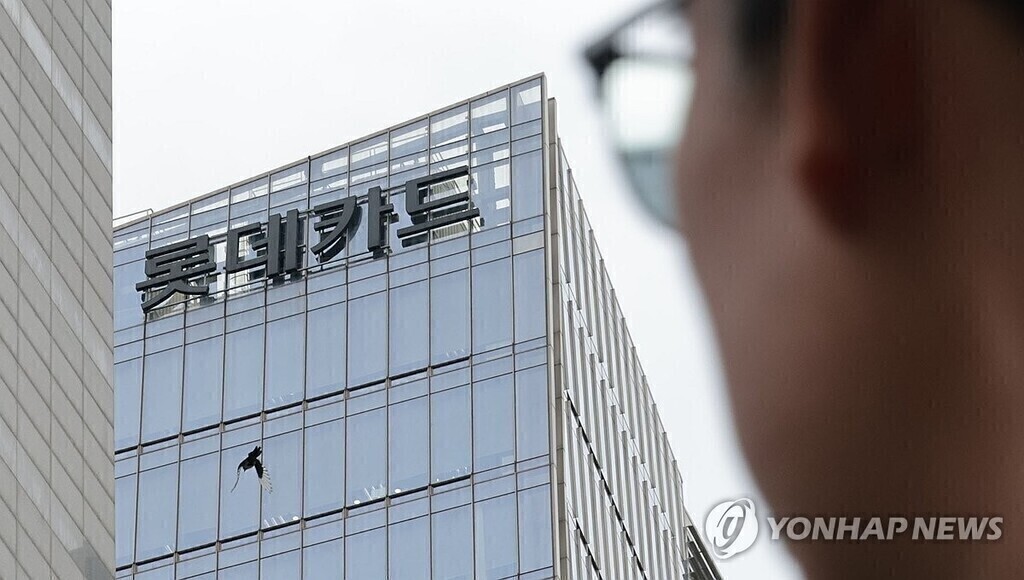
Photo courtesy of Yonhap News |
[Alpha Biz= Paul Lee] The fallout from a hacking incident at Lotte Card has shown little sign of easing into the new year, with mounting cost burdens and weakening asset quality coming into focus. While the company plans to seek a breakthrough by expanding its overseas operations, questions remain over whether such efforts will deliver meaningful financial results in the near term.
According to the financial industry on January 30, Lotte Card posted cumulative net profit of KRW 108.4 billion through the third quarter of fiscal 2025, representing just 79% of its full-year net profit of KRW 137.2 billion recorded in 2024. Multiple headwinds are expected to weigh on fourth-quarter earnings, including ongoing costs related to a large-scale personal data breach that occurred in July–August last year.
In response to the incident, Lotte Card has been offering affected customers long-term interest-free payment plans, card reissuance, and annual fee waivers, costs that the company has had to absorb. While the firm had generated quarterly annual fee revenue of around KRW 38–40 billion over the past year, this figure is expected to decline in the fourth quarter.
Concerns are also growing that reputational damage could weaken the company’s revenue base if customer attrition accelerates and new customer acquisition slows. As of the end of December last year, Lotte Card’s total number of individual credit card members stood at 9.53 million, down by nearly 100,000 from 9.62 million at the end of June, before the hacking incident. The decline is widely seen as the result of customers cancelling cards amid heightened security concerns.
Data from the Korea Credit Finance Association show that Lotte Card’s personal credit card purchase volume (lump-sum payments and installments combined) totaled KRW 18.33 trillion in the fourth quarter of last year, marking a year-on-year decline from KRW 18.47 trillion. Corporate credit card transaction volume also fell over the same period, slipping from KRW 2.37 trillion to KRW 2.28 trillion.
Asset quality indicators have also worsened. Lotte Card’s delinquency ratio stood at 2.22% as of the third quarter of last year, the highest among South Korea’s eight major dedicated card issuers, which include Samsung, Shinhan, KB Kookmin, Hyundai, Lotte, Hana, Woori, and BC Card. While most domestic card companies typically manage delinquency ratios around the 1% level, Lotte Card’s figure is roughly double that benchmark. The company’s ratio of non-performing loans (NPLs) also reached 2.45% during the same period.

Alphabiz Reporter Paul Lee(hoondork1977@alphabiz.co.kr)