 |
Photo courtesy of Yonhap News |
[Alpha Biz= Paul Lee] The South Korean government plans to implement an industrial electricity tariff reform in the first quarter of this year, raising power prices during evening and nighttime hours while lowering rates during daytime hours.
According to the Ministry of Climate, Energy and Environment’s energy transition policy roadmap released on February 1, the average unit price of industrial electricity currently stands at KRW 180–185 per kilowatt-hour. At present, nighttime industrial power rates are approximately 35–50% lower than daytime rates.
The government aims to restructure the pricing system to prevent excessive demand concentration during nighttime hours by shifting part of industrial electricity consumption back to daytime periods. The reform also seeks to encourage greater industrial absorption of rapidly increasing daytime solar power generation.
Industry analysts expect the impact of the tariff reform to vary significantly by sector. Manufacturers capable of adjusting operating hours—such as automotive, home appliance, and consumer goods producers—may be able to reduce costs by increasing daytime operations. In contrast, industries that require continuous 24-hour operations, including semiconductors, steel, and petrochemicals, are likely to face higher overall electricity costs due to rising evening and nighttime rates.
For example, Hyundai Motor Company and Kia previously abolished overnight shifts in 2013 and adopted a continuous two-shift daytime system, positioning them to benefit from lower daytime electricity rates under the proposed reform.
Conversely, semiconductor manufacturers such as Samsung Electronics, which is expanding advanced production lines in Pyeongtaek and Hwaseong, and SK hynix, which is investing heavily in facilities including Cheongju’s M15X and Yongin’s semiconductor cluster, may see increased cost pressure as their operations require uninterrupted power supply.
The petrochemical industry, already undergoing structural adjustments amid global oversupply, is also closely watching the reform. Electricity costs accounted for more than 5% of total production costs last year, with industry players arguing that domestic production costs remain higher than those of Chinese competitors and calling for broader industrial power tariff reductions.
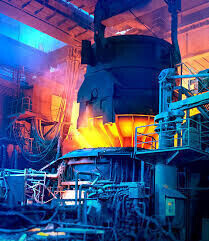
In the steel sector, while major players such as POSCO and Hyundai Steel operate both blast furnaces and electric arc furnaces, most small- and mid-sized steelmakers rely heavily on electric furnaces. These firms have traditionally leveraged lower nighttime electricity rates to adjust output in response to market conditions, making them particularly sensitive to any increase in off-peak tariffs.
Business groups argue that a comprehensive overhaul of the industrial electricity pricing system is necessary to strengthen the competitiveness of Korean companies. According to the Korea Employers Federation, average electricity payments by power-intensive industries—including display, steel, and chemical sectors—rose 36.4% from KRW 48.15 billion in 2022 to KRW 65.67 billion in 2024. Electricity costs as a share of revenue also climbed sharply from 7.5% to 10.7% over the same period.

Alphabiz Reporter Paul Lee(hoondork1977@alphabiz.co.kr)