 |
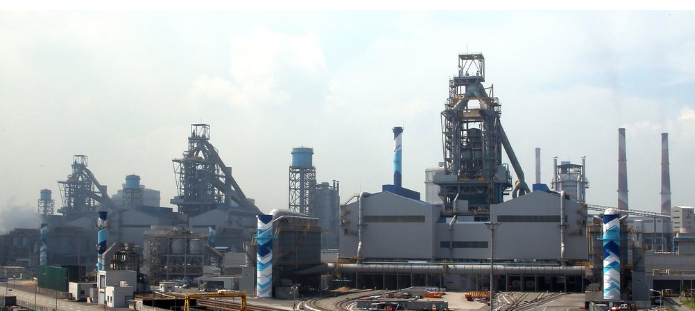
Photo courtesy of Yonhap News |
[Alpha Biz= Paul Lee] Last year, South Korean companies submitted a record number of trade remedy requests, including anti-dumping investigations, the highest since records began.
According to the Trade Commission of the Ministry of Trade, Industry and Energy, a total of 13 anti-dumping petitions were filed by domestic companies in 2025, surpassing the previous record since 2002. Of these, nine cases targeted Chinese companies, three targeted the European Union, and one targeted Japan.
The Trade Commission launched investigations into 10 of these cases. Steel and non-ferrous metal products accounted for the largest share with four cases, followed by chemical products with three cases. The findings reflect structural adjustments needed in mature industries such as steel and chemicals, which face overcapacity and global competition.
Among the 10 cases under investigation, five received preliminary determinations. In the steel sector, Hyundai Steel filed petitions against Japanese and Chinese imports of carbon and alloy hot-rolled steel, leading the Trade Commission to issue preliminary anti-dumping duties ranging from 28.16% to 33.57%, citing material harm to domestic industries.
In the chemical sector, the Trade Commission issued preliminary anti-dumping duties of up to 42.81% on imported polyvinyl chloride (PVC) paste resin used in building interior materials. The affected products include those from Germany’s Vinolit (42.81%), France’s Chemours (37.68%), Norway’s Inovin Europe (25.79%), and Sweden’s Inovin Trade (28.15%), following a petition from Hanwha Solutions.
Advanced technology sectors also saw anti-dumping investigations. HD Hyundai Robotics filed petitions against two Japanese and three Chinese companies for vertical multi-joint industrial robots with four or more axes, used in automotive assembly, logistics, and metal processing. Preliminary anti-dumping duties of 21.17% to 43.60% were applied after determining material harm to domestic industries. Companies affected include Japan’s Yaskawa and Fanuc, and China’s ABB Engineering Shanghai, KUKA Robotics Guangdong, and Kawasaki Heavy Industries.
In addition, the Trade Commission imposed provisional anti-dumping duties of 11.92%–19.43% on textile boards from Thailand, affirming harm to domestic producers.
The government expanded and strengthened the Trade Commission in March last year to better protect domestic industries from unfair trade practices and respond to the acceleration of protectionism observed globally during the second term of former U.S. President Trump.
알파경제 Paul Lee 특파원(hoondork1977@alphabiz.co.kr)