 |
Photo courtesy of Yonhap News |
[Alpha Biz= Kim Youngtaek] Hyundai Engineering & Construction is facing mounting scrutiny after allegations emerged that inspection documents were falsified at a construction site for the GTX-A line’s Samsung Station section, where a major rebar omission was identified.
According to a report obtained by lawmaker Bok Ki-wang on May 20, the supervision firm Saman Corporation submitted a construction management interim report in November stating that all inspection checklist items had passed, despite being aware of critical construction defects.
The checklist included 10 categories—such as rebar shape, size, spacing, and placement sequence—and marked all as “pass,” even though the rebar had not been installed according to design specifications.
Hyundai E&C reportedly identified the issue on October 23 and notified the supervision team on October 30, followed by a formal report to the Seoul Metropolitan Government on November 10.
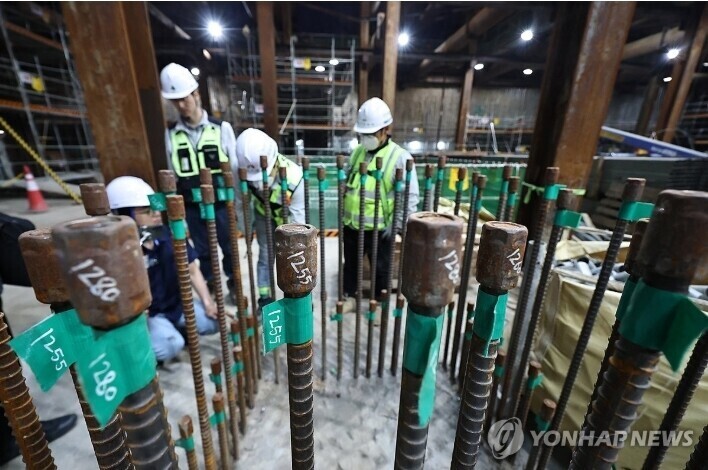 |
Photo courtesy of Yonhap News |
On-site findings later confirmed that only one layer of rebar had been installed instead of the required two, resulting in a total omission of 178 tons of steel reinforcement—a serious structural defect.
Despite this, the supervision team issued an inspection report dated November 11 indicating no issues with the construction process.
The case raises significant concerns about the integrity of construction oversight, as supervision is a critical safeguard to ensure compliance with safety and quality standards.
Rep. Bok called for a thorough investigation, stating that “even safety documentation appears to have been manipulated,” and questioned whether authorities may have attempted to downplay or conceal the issue.
The controversy adds to broader concerns over construction quality and regulatory oversight in major infrastructure projects, particularly those involving high-profile developments like the GTX-A line.
Alphabiz 김영택 기자(sitory0103@alphabiz.co.kr)