 |
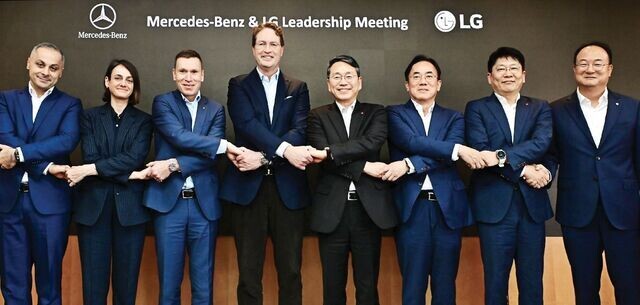
Senior executives of LG Group and Mercedes-Benz pose for a commemorative photo at LG Twin Towers in Yeouido, Seoul, on November 13. The two sides agreed to strengthen comprehensive cooperation in future mobility and automotive electronics. (Photo courtesy of LG Electronics) |
[Alpha Biz= Kim Jisun] LG Energy Solution has signed a KRW 2.06 trillion electric vehicle (EV) battery supply agreement with Mercedes-Benz, marking a significant achievement one month after the meeting between Ola Källenius, Chairman of Mercedes-Benz Group, and the LG Group’s top executives at the Yeouido Twin Towers.
In a regulatory filing on December 8, LG Energy Solution announced that it entered into a KRW 2.06 trillion contract to supply EV batteries to Mercedes-Benz. The batteries will be supplied to markets in North America and Europe, with the contract period spanning from March 1, 2028, to June 30, 2035. The company noted that additional details regarding the agreement cannot be disclosed due to confidentiality arrangements with the client.
Industry observers view the agreement as solidifying LG Energy Solution and Mercedes-Benz as key strategic partners in the global EV market. During his visit to Korea on November 13, Chairman Källenius stated in a meeting with LG Group affiliate leaders, “LG and Mercedes-Benz share a vision grounded in innovation, quality, and sustainability. By combining our strengths, we will build vehicles that set new standards for the global automotive industry.”
Prior to this latest agreement, the two companies had signed three EV battery supply contracts since last year, totaling approximately 150 gigawatt-hours (GWh). Unlike the previous agreements—which focused exclusively on high-end models—the batteries to be supplied under the new contract are understood to be for mid- to lower-priced vehicles. This segment has historically been dominated by Chinese manufacturers such as CATL, leveraging competitive pricing.
Industry experts expect that LG Energy Solution’s latest contract may serve as a turning point in helping Korean battery manufacturers regain market share in the global mid-priced EV segment.
Alphabiz Reporter Kim Jisun(stockmk2020@alphabiz.co.kr)